Low Fluid Intake
Not drinking enough fluid can make urine more concentrated and may increase the likelihood of crystal formation.
Explore kidney stone symptoms, causes, diagnosis and treatment options. Consult Dr. Muhammad Ijaz for individualized homeopathic care in Islamabad.
Kidney stones are hard deposits that can form inside the kidneys when certain substances in urine become concentrated and crystallize. Their size and location can influence the symptoms a person experiences.
Pain in the side or back, blood in the urine, nausea and urinary discomfort may occur, but symptoms vary from person to person. Persistent or severe symptoms require appropriate medical assessment.
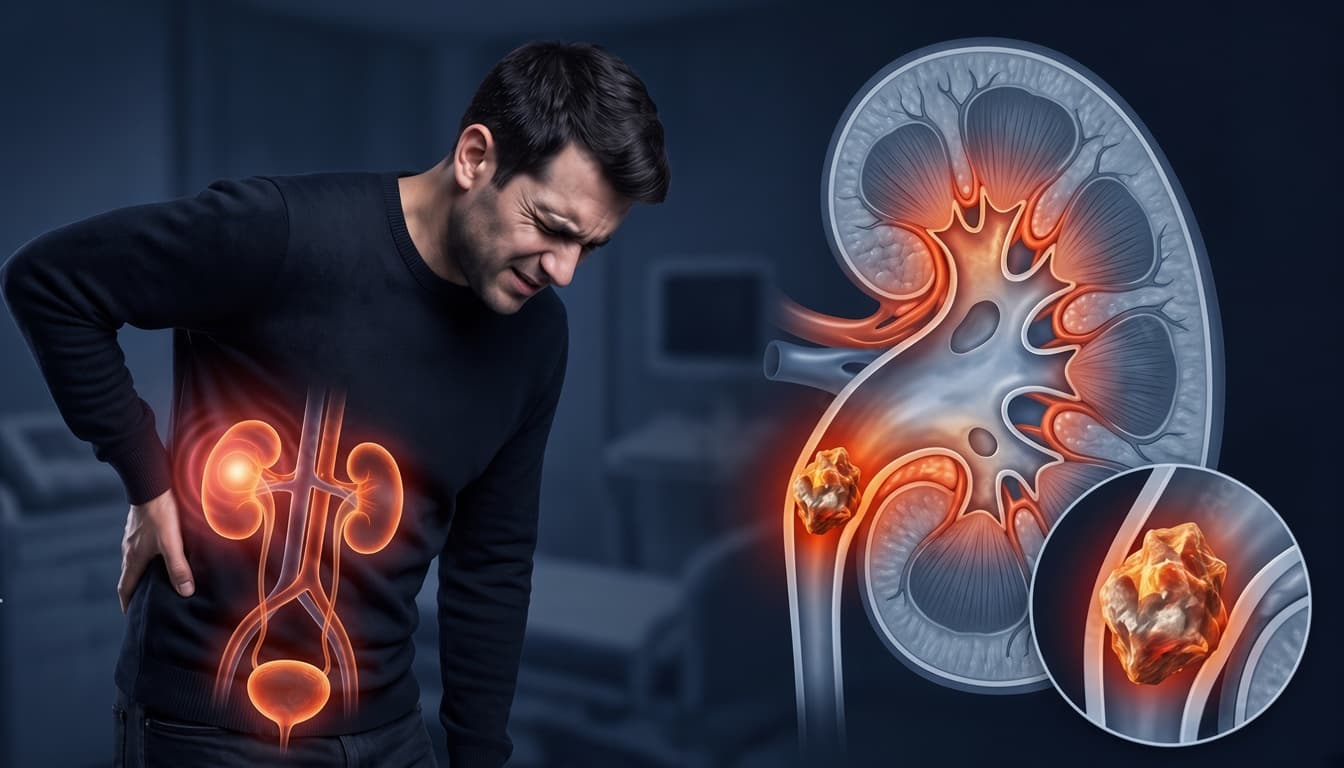
Symptoms can vary between individuals. A symptom list can help with awareness, but it should not be used as a substitute for diagnosis.
Understanding contributing factors can help patients recognize patterns and decide when professional assessment may be appropriate.
Not drinking enough fluid can make urine more concentrated and may increase the likelihood of crystal formation.
Higher levels of substances such as calcium, oxalate or uric acid can contribute to certain types of kidney stones.
Dietary patterns, including high intake of sodium or certain stone-forming substances, may influence stone risk in susceptible people.
A previous history of kidney stones or a family tendency can increase the likelihood of developing stones again.
At Dr. Muhammad Ijaz's clinic, consultation begins with a detailed discussion of symptoms, relevant history and previous care. The aim is to understand the individual presentation before discussing an appropriate care plan.
Persistent, severe or unexplained symptoms should receive appropriate medical evaluation rather than being managed solely from online information.
Important: Severe or persistent pain, fever or chills, repeated vomiting, significant blood in the urine, or difficulty passing urine should be medically assessed promptly. This page provides general health information and does not replace an examination or diagnosis by a qualified healthcare professional.
A kidney stone is a hard crystalline deposit that forms in the urinary system from substances present in urine.
Common symptoms can include severe side or back pain, pain toward the groin, blood in urine, nausea and urinary discomfort.
Low fluid intake can make urine more concentrated and may contribute to stone formation in susceptible people.
No. Some stones may cause few or no symptoms, while a stone obstructing urine flow can cause significant pain.
Severe or persistent pain, fever, vomiting, blood in urine, or difficulty passing urine should receive prompt medical evaluation.
Contact the clinic by telephone or WhatsApp to ask about consultation options and whether your symptoms are suitable for an initial consultation.
If you are experiencing persistent urinary or kidney-stone symptoms, contact the clinic to discuss your symptoms and available consultation options.
Visit the contact page