Seasonal Allergy & Hay Fever
Seasonal allergic rhinitis, often called hay fever, can occur after exposure to pollens or other seasonal airborne allergens. Symptoms may include sneezing, an itchy or runny nose, congestion and watery eyes.
Explore common allergy-related nasal and breathing symptoms, possible triggers and when to seek professional medical advice.
Seasonal allergy, also known as hay fever when it causes allergic rhinitis, may lead to sneezing, nasal itching, a runny or blocked nose and watery eyes. Dust, pollen, mould and other exposures can be possible triggers.
Similar symptoms can also arise from infections, sinus conditions or other causes. Persistent symptoms, reduced sense of smell or breathing problems deserve proper medical assessment rather than diagnosis from symptoms alone.
These concerns may overlap, but they are not all the same condition and may need different assessments.
Seasonal allergic rhinitis, often called hay fever, can occur after exposure to pollens or other seasonal airborne allergens. Symptoms may include sneezing, an itchy or runny nose, congestion and watery eyes.
Dust mites and pollen are among the possible triggers of nasal allergy symptoms. Symptoms and triggers vary, so a clinician can help assess the pattern and whether further evaluation is needed.
Nasal congestion and facial pressure can have several causes. Nasal polyps may also cause persistent blockage or a reduced sense of smell and require examination for diagnosis.
Allergens such as pollen, dust or mould can trigger asthma symptoms in some people. Wheezing, chest tightness, breathlessness or a persistent cough should be medically assessed.
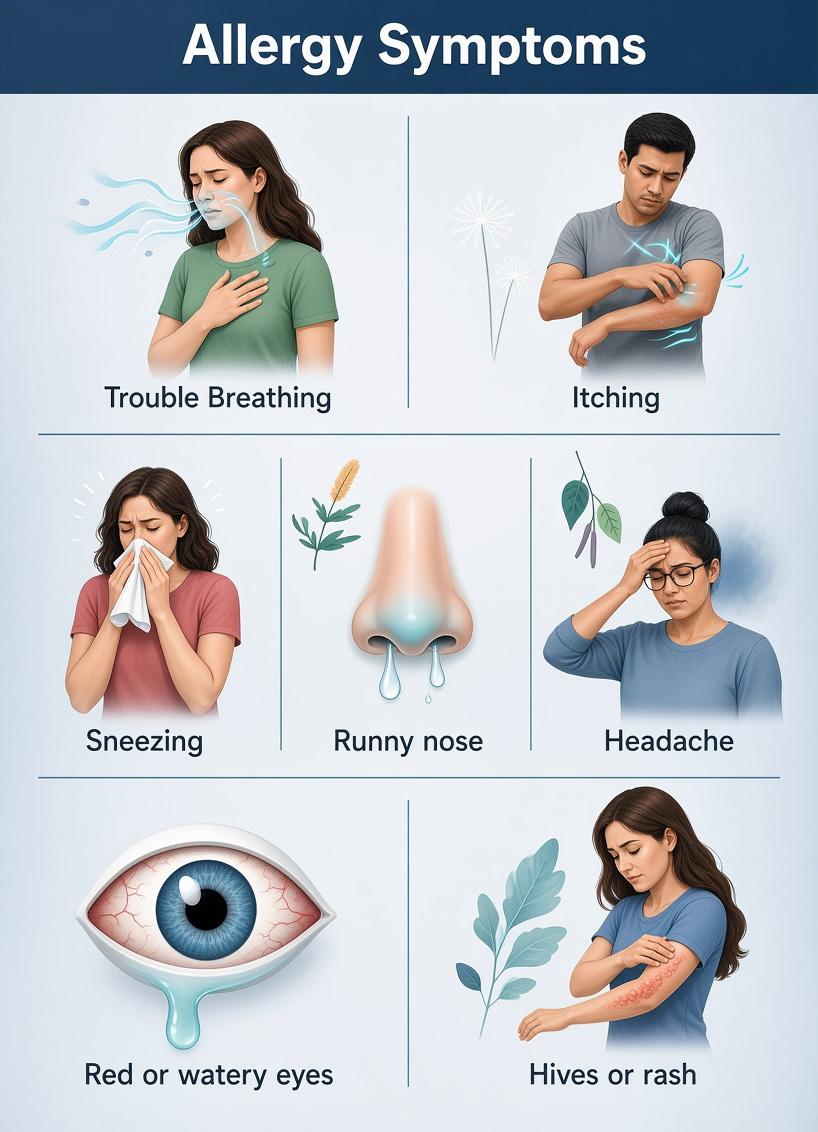
Not everyone has the same symptoms, and symptoms alone cannot confirm an allergy. Keep track of when they occur and discuss recurring or troublesome symptoms with a healthcare professional.
Triggers differ between people and may be seasonal or present throughout the year.
Tree, grass and weed pollen can cause seasonal symptoms in people who are sensitive to them.
Dust mite allergens in indoor environments can contribute to year-round nasal allergy symptoms.
Mould spores and airborne irritants may contribute to nasal or breathing symptoms in some people.
Colds, sinus inflammation, nasal polyps and asthma can cause symptoms that overlap with allergies and may need clinical assessment.
A consultation can review when symptoms occur, possible exposures, previous diagnoses and how symptoms affect daily life. The clinician can advise whether further allergy, ENT or respiratory assessment is appropriate.
Homeopathic consultation should not replace evidence-based evaluation or prescribed treatment for asthma, severe allergy symptoms, sinus disease or nasal polyps.
Important: Severe difficulty breathing, blue or grey lips, or rapidly worsening asthma symptoms require emergency medical care. Do not stop or change prescribed asthma medicines without advice from your healthcare professional. This page provides general information and does not replace diagnosis or treatment.
Seasonal allergy refers to symptoms that occur during certain times of year, often after exposure to airborne pollens. It may cause sneezing, itchy or watery eyes, a runny nose or congestion.
Hay fever is a common name for seasonal allergic rhinitis, an allergy-related condition affecting the nose and often the eyes.
Dust mite allergy can cause nasal symptoms such as congestion, sneezing or a runny nose. A clinician can assess whether allergy or another condition is more likely.
Allergic rhinitis and sinusitis are different conditions, though symptoms can overlap or occur together. Persistent facial pain, fever or worsening symptoms should be assessed.
Nasal polyps can cause persistent nasal blockage, runny nose or reduced smell. Examination by a healthcare professional is needed to assess the cause.
Seek advice if symptoms persist, worsen, interfere with sleep or daily life, or if asthma symptoms are increasing. Get emergency help for severe breathing difficulty.
If recurring sneezing, nasal congestion or other symptoms are affecting your routine, contact the clinic to ask about consultation options and appropriate next steps.
Visit the contact page